What Is Orthodox Christianity?
The ancient Christian faith, preserved and lived in the Church.
Orthodox Christianity is not a new denomination or a recent reform movement. It is the historic Christian Church, faithfully preserving the teaching, worship, and life handed down from the apostles and lived continuously in the Orthodox Church.
THE CHURCH OF THE APOSTLES
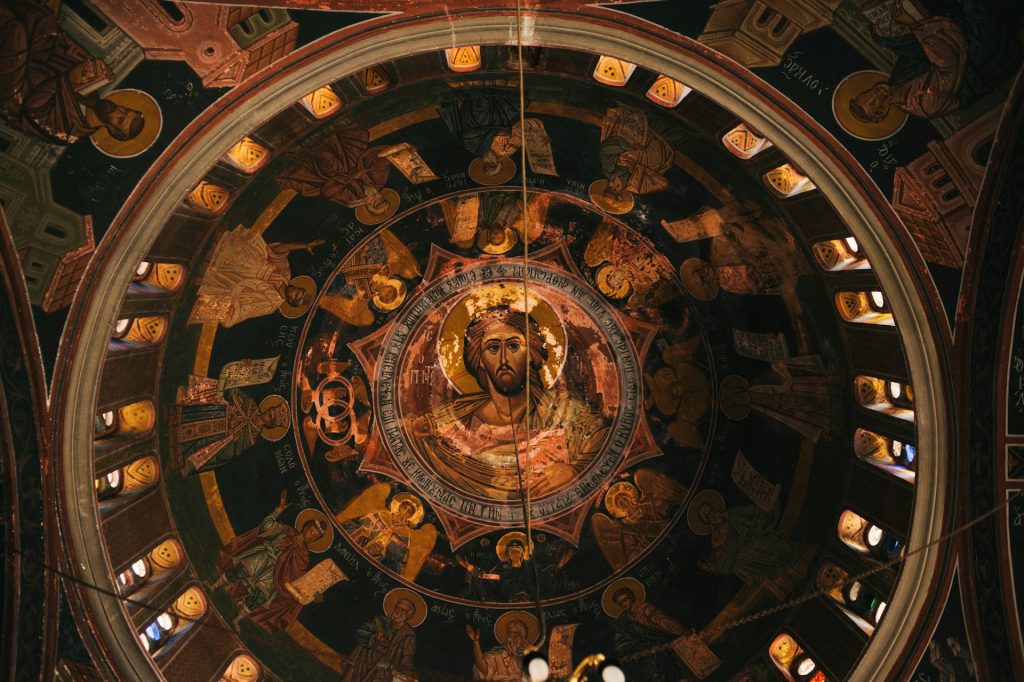
Orthodox Christians believe that the Church was founded by Jesus Christ and established through the apostles. The faith proclaimed in the New Testament did not disappear or need to be rediscovered centuries later. It has been preserved, worshiped, and lived continuously in the Church.
We do not see ourselves as one branch among many competing expressions of Christianity, but as the continuation of the apostolic Church described in the Book of Acts.
This continuity is not only doctrinal — it is liturgical, sacramental, and communal.
Holy Scripture and Holy Tradition
The Orthodox Church reveres the Holy Scriptures as the inspired Word of God. The Bible was written within the life of the Church and is read, preached, and prayed in every Divine Liturgy.
Orthodox Christians also speak of Holy Tradition — not as human customs, but as the living transmission of the apostolic faith. The same Holy Spirit who inspired the Scriptures also guided the Church in the years of persecution before the canon of the New Testament was formally recognized, and continues to guide the Church in preserving the true meaning of the Scriptures.
Scripture and Tradition are not in competition. They belong together.

Worship at the Center
A Worshiping Church
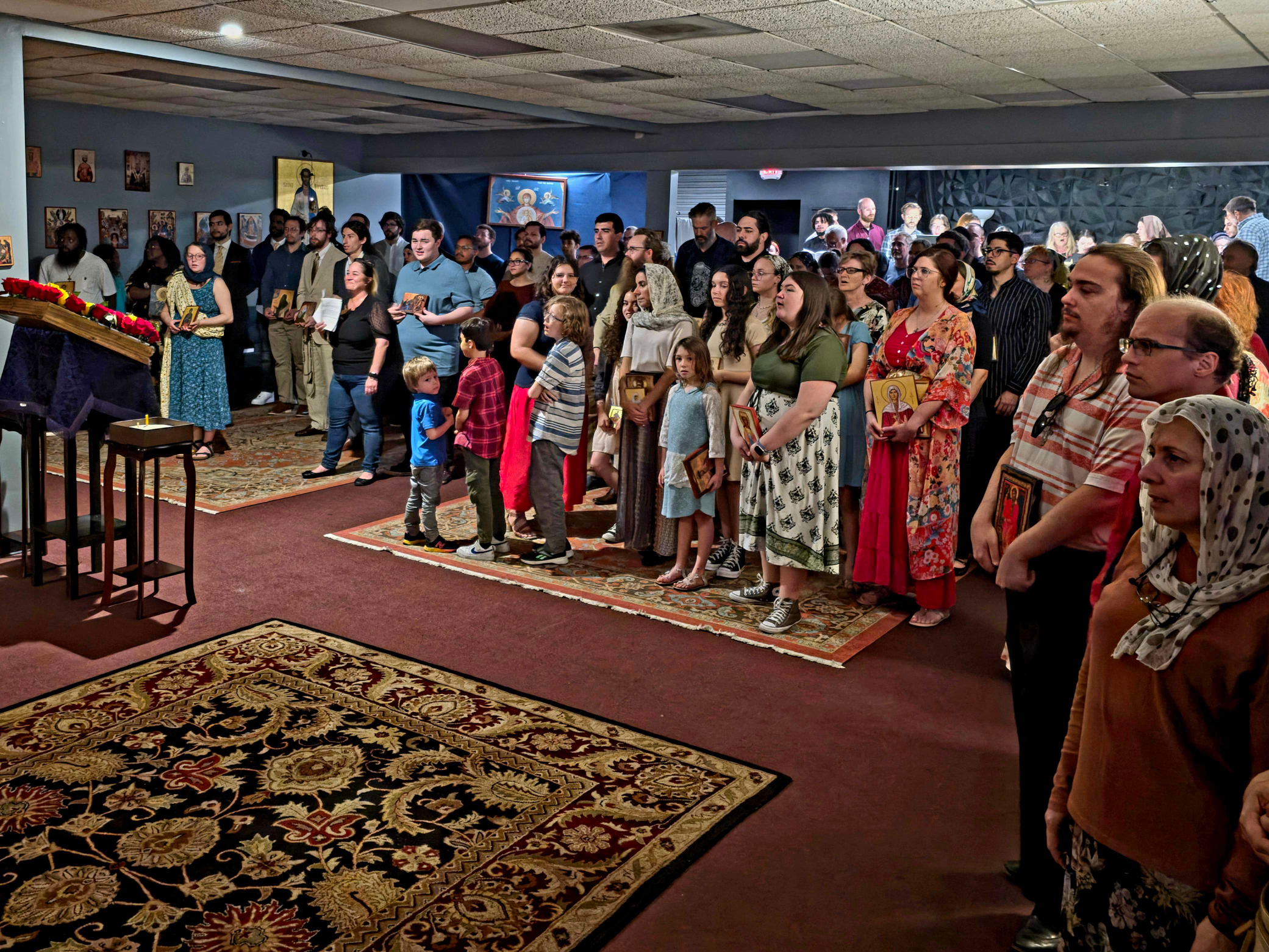
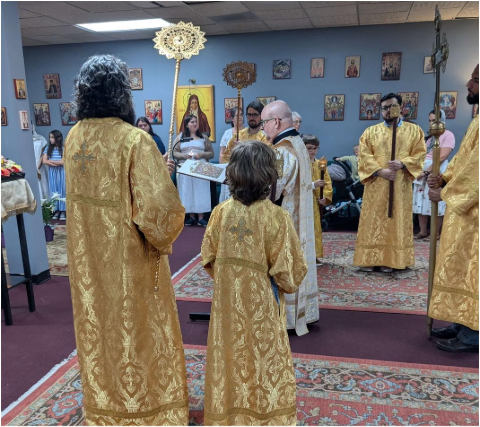
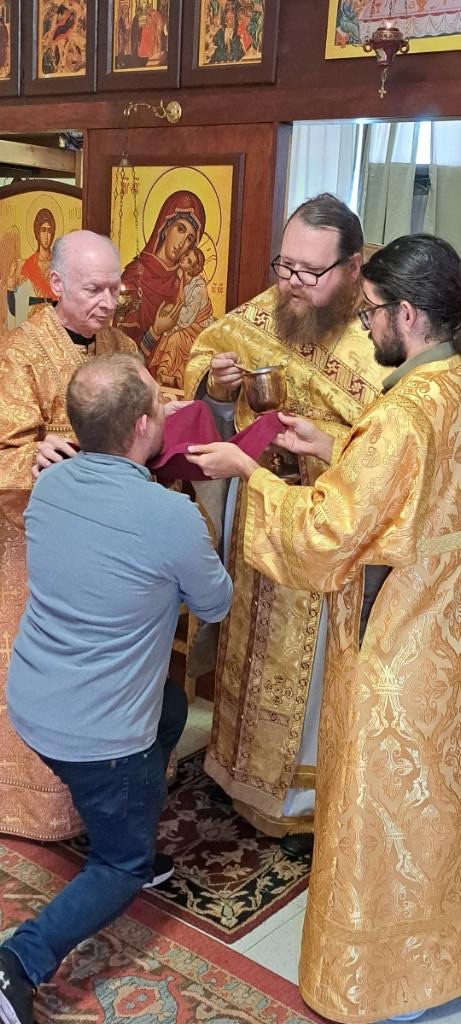
Orthodoxy is not primarily a system of ideas but a life of worship. The Divine Liturgy is the heart of parish life. Through prayer, psalmody, Scripture, and the Eucharist, the Church encounters the living Christ.
Worship is participatory. The people sing. They pray. They stand. They receive Holy Communion. They hear the Epistle and Gospel proclaimed. They smell the fragrant incense offered to God. The Church’s theology is not merely explained — it is sung, heard, seen, and embodied.
To understand Orthodoxy, one must experience its worship.
Worship at the Center
The Holy Mysteries
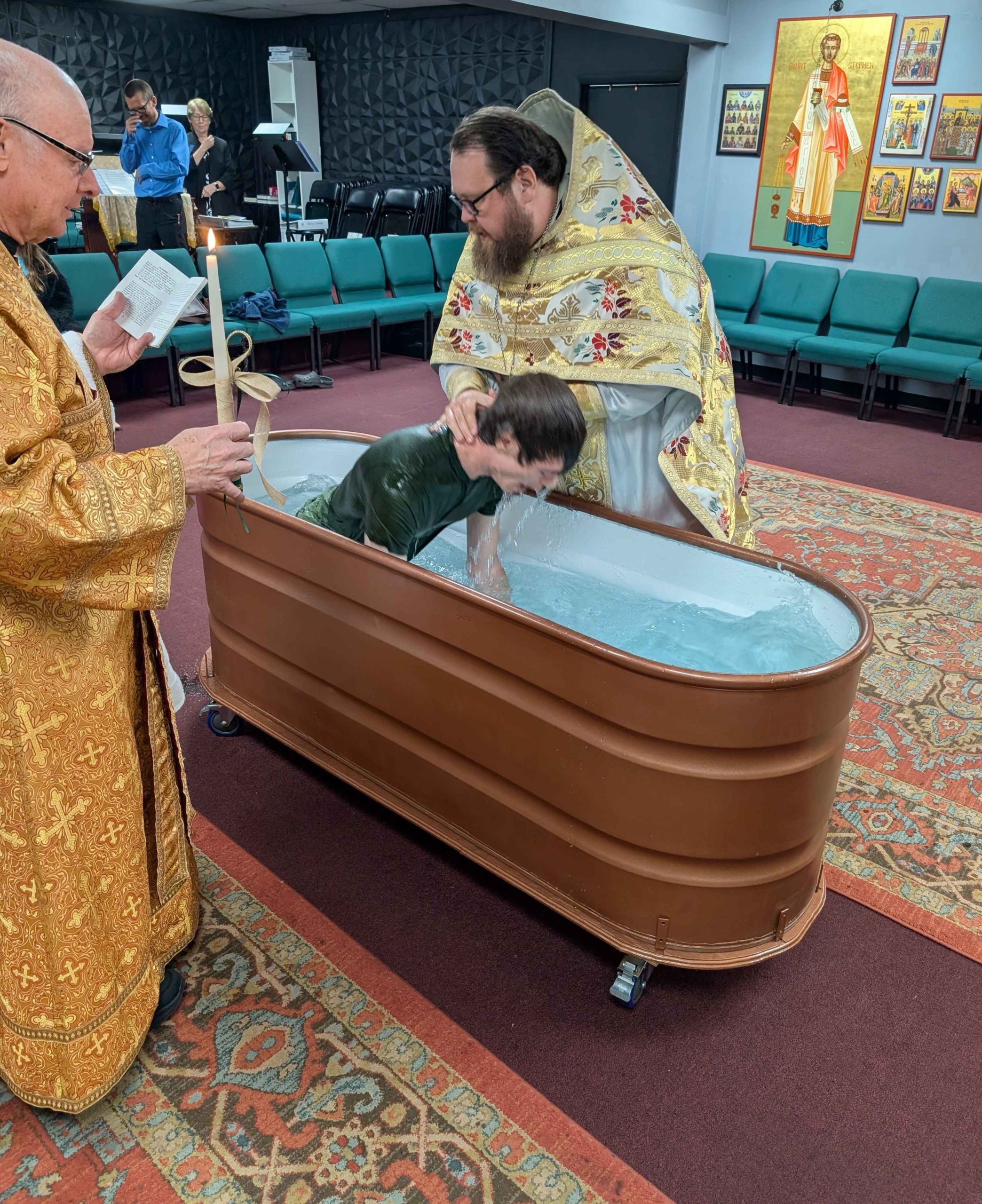
The Orthodox Church lives a sacramental life. Through Baptism and Chrismation, a person is united to Christ and incorporated into His Body. In Confession, sins are forgiven and healing is given. In Holy Unction, the sick are anointed and strengthened. In Marriage and Ordination, the grace of the Holy Spirit sanctifies human life and service.
At the center of this sacramental life is the Eucharist.
God gives us wheat and grapes. We receive them as gifts, fashion them into bread and wine, and offer them back to Him in thanksgiving. In the Divine Liturgy, through the invocation of the Holy Spirit, these gifts become the Body and Blood of Jesus Christ — given “for the life of the world.”
The grace of God is not abstract. It is received. It is tasted. It is shared.
In the bold language of the Church, God gives us these mysteries so that we may partake of Him — not symbolically, but truly — and share in His divine life. As Christ Himself said, “He who eats My flesh and drinks My blood abides in Me, and I in him” (John 6:56).
The Christian life is lived in communion with Christ and with one another.
One Church, in Heaven and on Earth
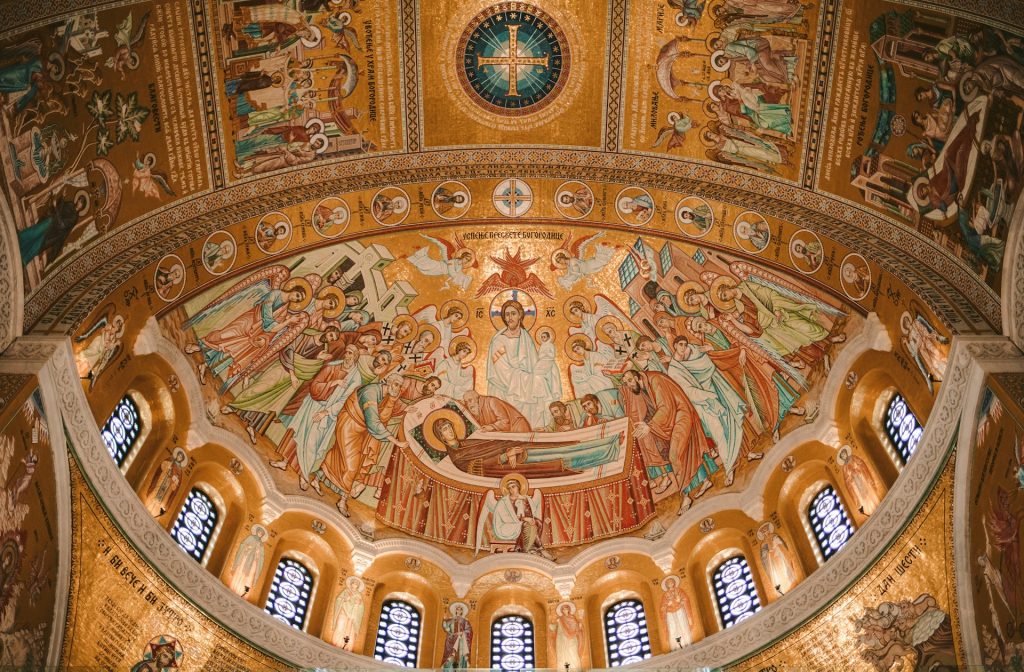
Orthodox Christians believe that the Church includes not only those living today, but also those who have finished the race in faith. The saints are alive in Christ and continue to grow “from glory to glory” (2 Corinthians 3:18).
All worship belongs to God alone. Yet we honor the saints because God’s grace was revealed in their lives. We remember them much as we remember faithful family members who preserved what is true and good and handed it on to us. They helped lay the path by which we came to know Christ.
The saints show us that holiness is possible. We ask their prayers as members of the same Body of Christ.
A Life of Transformation
Salvation as Healing and Restoration
In Orthodox Christianity, salvation is not merely a legal declaration but the healing and restoration of the human person. Christ came not only to forgive sins, but to unite humanity to God and restore us to communion with Him.
St. Athanasius the Great famously wrote, “God became man so that man might become like God.” By this he did not mean that we become divine by nature, but that through Christ we are invited to share in the life of God by grace.
For this reason, Orthodox Christians often speak of salvation in a living and dynamic way. We have been saved through Christ’s death and resurrection. We are being saved as we grow in repentance, prayer, and faithfulness. And we hope to be saved, trusting in the mercy of God.
Salvation is a free gift of God’s grace. Yet it is a gift that must be received and lived faithfully. Through worship, repentance, ascetic discipline, watchfulness, and participation in the sacraments, the Christian life becomes a lifelong journey of transformation into the likeness of Christ.
This growth in holiness is not instant, but faithful and steady — a life lived in communion with God.
The Orthodox Church in the Modern World
The Orthodox Church is global, spanning cultures and languages across the world. From the Middle East to Eastern Europe, from Africa to Asia, the same faith has been preserved and lived in many lands.
As Orthodox Christians from these regions made their way to North America, they brought the ancient faith with them — in different languages, customs, and cultural expressions. From the outside, these distinctions can appear similar to denominational differences. But Orthodox Christians understand them as diverse expressions of the same apostolic faith, handed down through generations.
In North America, the Orthodox Church in America serves communities in cities, towns, and missions across the country. St. John the Merciful is one such parish — worshiping in English, rooted in the ancient faith, and serving South Orlando, Kissimmee, and St. Cloud.
We often gather with other Orthodox Christians from different cultural backgrounds in shared worship, fellowship, and ministry. Together, we confess the One, Holy, Catholic, and Apostolic Church and seek to bear faithful witness to Christ here in Central Florida.