Church Etiquette
If you are visiting an Orthodox church for the first time, you may wonder what to do — when to stand, how to dress, or how to participate.
Do not worry.
Orthodox worship is learned over time. No one expects you to know everything.
The goal is not fashion — it is reverence.
What to Wear
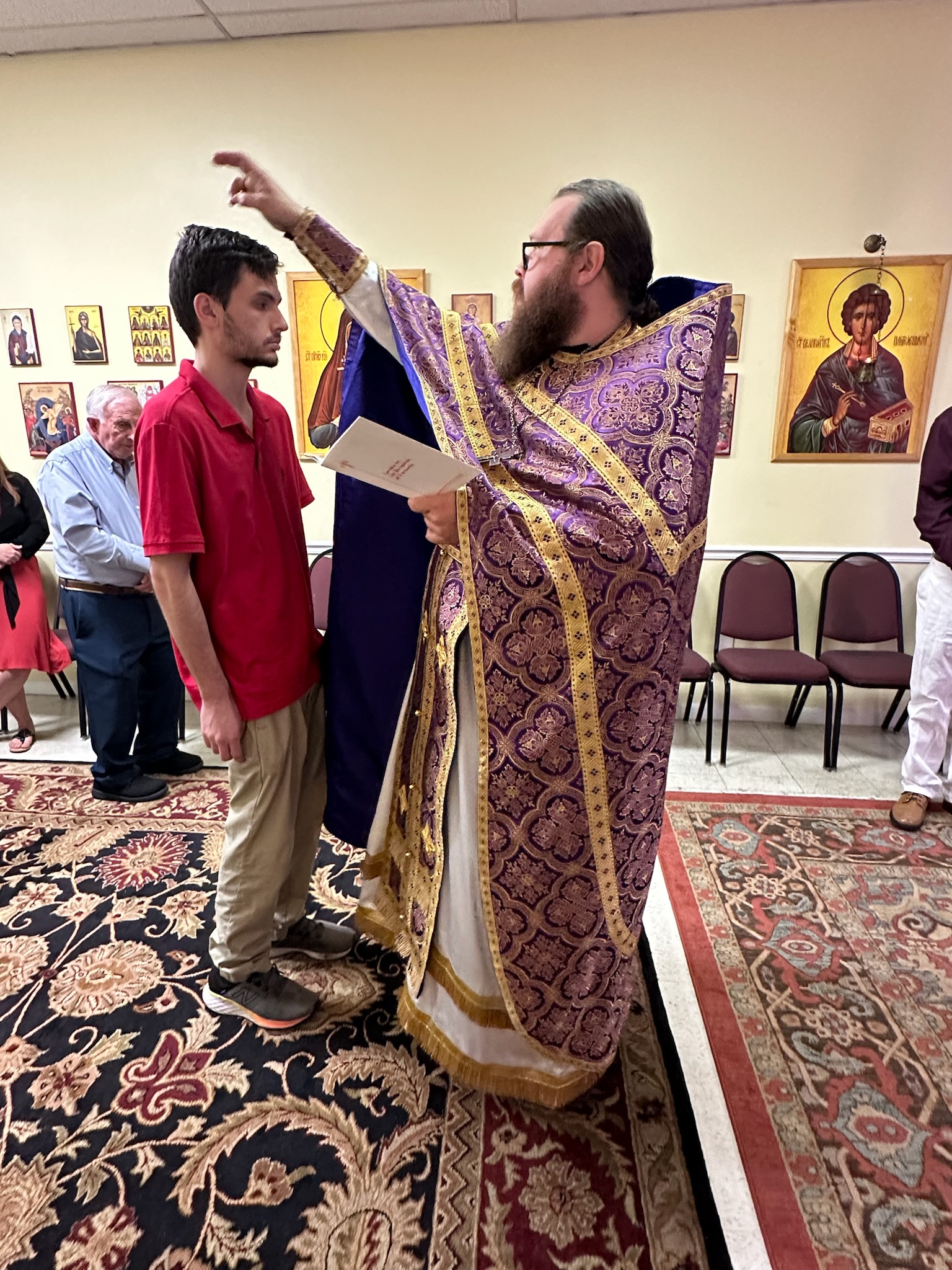
Dress modestly and respectfully, as you would for an important occasion.
For Sunday Divine Liturgy, many people choose what might be called their “Sunday best” — clothing that reflects the festal character of the Eucharist.
For Vespers and weekday services, attire is typically a step less formal, though still modest and reverent.
For most people, this means:
- Slacks or a skirt/dress
- Collared shirts or blouses
- Closed-toe shoes
Children should also be dressed neatly and modestly. We encourage families to avoid overly casual clothing such as pajamas, costumes, or graphic shirts that draw attention. Simple, comfortable clothing appropriate for church is best.
Some women choose to wear a head covering as a pious practice. Others do not. Head coverings are welcome but not required.
We encourage modesty and reverence, not uniformity. If you are unsure, aim slightly more formal rather than less.
Physical limitations are understood.
Standing, Sitting, and Movement
Orthodox worship is participatory and embodied.
We stand for much of the service as a sign of attentiveness and prayer. Our worship space is open, with chairs arranged along the walls. You are free to sit when needed and stand again when you are able.
Because we do not have fixed pews, movement is normal.
You may:
- Stand when others stand
- Sit when you need to
- Follow along as you are able
If you are unsure what to do, simply observe those around you.
Making the Sign of the Cross
You will notice many people making the sign of the cross at various moments in the service.
If you are Orthodox, make the sign of the cross as you are accustomed.
If you are not Orthodox, you are not expected to imitate what you do not yet understand. Observe and learn at your own pace.
Venerating Icons
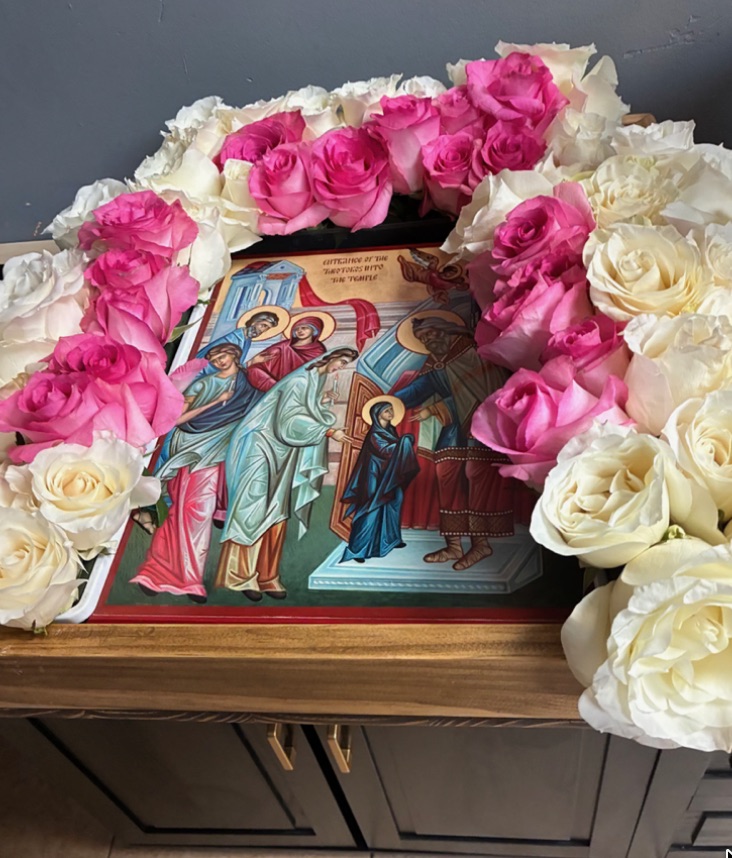
Before or after the service, you may see people approaching icons, bowing, or kissing them.
This is a sign of love and honor toward Christ and His saints.
You are welcome to observe quietly. You are not required to participate.
The Eucharist
The Eucharist (Holy Communion) is offered to baptized and chrismated Orthodox Christians who are spiritually prepared.
If you are not Orthodox, we ask that you remain in your place during Communion. No one will be singled out.
If you have questions about receiving Communion, please speak with the priest.
Especially Sacred Moments
Certain moments in the Divine Liturgy are especially solemn — such as the Gospel reading, the Great Entrance, the Eucharistic prayer, and Holy Communion.
During these times, it is customary to stand attentively and minimize movement as we offer our full attention in prayer.
Children in the Service
Children remain in the services with their families and learn to pray by being present.
Parents are their primary guides in worship. Children should remain near their parents rather than moving freely throughout the nave. Quiet, church-related books are welcome; electronic devices and noisy toys should be avoided. Out of consideration for others, food should not be consumed in the nave.
You may hear whispers, movement, or the quiet sounds of little ones learning to pray. This is part of how they grow.
The Church is a family, and reverence is formed gradually over time.
Guidance for Families:
Photography & Phones
Please silence phones before the service begins.
Photography during services is discouraged unless previously arranged, as our focus is prayer rather than documentation.
Our parish livestreams Sunday Divine Liturgy and occasionally photographs services and parish events for communication and outreach purposes.
If you prefer not to appear in livestream footage or photographs, please speak with the priest or contact us so we can make appropriate accommodations.
After the Service
Following Sunday Divine Liturgy, we rearrange the space and set up tables and chairs for coffee hour.
Visitors are warmly invited to stay, share a meal, ask questions, and meet members of the parish. This is often the easiest place to begin a conversation.
A Word of Reassurance
Orthodox worship is not a performance.
It is prayer.
Reverence is learned gradually. If you are new, allow yourself simply to be present and attentive.
The rhythms of the Church unfold over time.